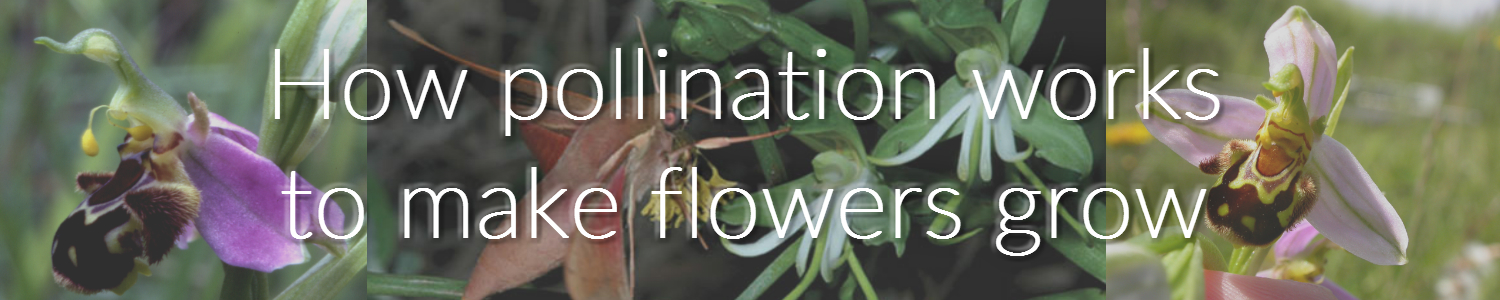
Special Delivery: How Pollination Works to Make Flowers Grow
Orchids are an attractive and large family of plants that are loved by many. In fact, they are one of the largest plant families in the world. They are valued for their beauty, with some used for medicines and even food. For example, vanilla is an orchid. The flowers grow in vibrant colors and color combinations and vary in appearance. Some orchids even mimic the environment around them in an effort to aid pollination. By copying their surroundings, they are better able to lure insects, birds, and even certain animals that can help spread their pollen. To understand how insects spread the pollen of orchids and other flowering plants, it is necessary to first understand pollination.
A flowering plant has reproductive parts that make pollination possible. They have a stamen, which produces pollen, and they also have a stigma, which sits atop of what is called the pistil. The stigma is considered the female part of the plant, and it is typically sticky. The stamen is the male part of the plant, and the pollen that it produces is granular and also sticky. For pollination to occur, the pollen must be transferred from the stamen of one flower to the stigma of another flower of the same species. For example, the pollen of an orchid must be transferred to the stigma of another orchid for pollination to work. The insect or bird that carries the pollen from one flower to another is called a pollinator. It collects the pollen when it lands on a flower, typically to feed or look for food. The pollen sticks to the pollinator's legs and body and is rubbed or otherwise falls off when it lands on the stigma of another flower. Once it is on the stigma, the pollen germinates, resulting in a pollen tube rising from the flower's ovule. If fertilization is a success, the ovule will develop into a seed.
Read more on how pollination makes flowers grow by clicking any of the following links:
- Serbian Internet Beekeeping Journal: Go here to find links to multiple websites about Serbian beekeeping.
- Sorry, No More Honey: Read about bees, pollination and the making of honey at Vernon Downing's website. At the bottom of the page are links to other sites.
- Flora Laboratories and Orchid Resources, Including Those That Send Flowers Online: Visit this page for a list of links to societies related to orchids and carnivorous plants as well as links to nurseries, magazines, and other sites.
- Devonport Orchid Society: Orchid enthusiasts may click here to open up a page on the Davenport Orchid Society website that lists numerous orchid-related links.
- How Flower Delivery Services Can Add a Dash of Christmas to Your Home: The North Shore Mums website features an article about how to use flowers to make Christmas decorations. Wreaths, Christmas-related scents, flowers, tea towels, and Advent calendars are some of the subjects covered here.
- All She Wants For Christmas Is Flower Delivery Services to Send Blue Orchids and Poo: Courtesy of Southern Living magazine, the Grumpy Gardener offers advice on revenge-based Christmas gifts. Blue orchids and mole traps are some of the examples he gives.
- Exotic Fruit Basket Pictures: Visit this page for a collection of fruit basket photographs as well as links to other photograph collection sites.
- Best Tri-Cities Flower Shops to Send Flowers Online: Open this link to the radio station KORD 102.7 FM and review its list of the top ten flower shops in the Tri-City area around Richland, Washington.
- Plan an Epic Easter Egg Hunt and Get Baskets From a Site Offering Flower Delivery Services: Chesmar Homes presents advice on its blog for running the perfect Easter egg hunt. Commercial links to Easter egg supply vendors and other articles can be found at the bottom of the page.
- Patricia Flowers: This is the Florida State University staff page for Patricia Flowers, the 2013 Dean of Music.
- The Flowers Paradigm: How Writers Write: Click on this link to go to a presentation about writing tips. It is based on advice from Dr. Betty Flowers and Bryan Garner and relies heavily on analogies based on flowers.
- Let Flowers of Many Kinds Blossom, Diverse Schools of Thought Contend: Go here to read about the philosophy of the Chinese Communist Party regarding scientists, writers, and artists. It is a speech originally presented by Communist Party Propaganda Department Director Lu Ting-yi in 1956.
- Handling of Cut Flowers for Air Transport: Information about the safe international transportation of cut flowers is the subject of this document.
- Methods of Preserving Flowers: Visit this link to read detailed advice on various methods of drying and preserving flowers.
- Gifts and Flowers: The University of Rochester Medical Center has a gift shop in their main lobby. Click this link to see their hours of operation and the services that they provide.
- Family, Home, and Garden Education Center: Cut Flowers: The University of New Hampshire Cooperative Extension provides valuable information on how to care for cut flowers in this article. Purchasing and caring for cut flowers and growing cut flowers are the main topics covered here.
- Speaking of Flowers: Student Movements and the Making and Remembering of 1968 in Military Brazil: This link takes readers to information for a book about student protests and political activity during the military dictatorship that ruled Brazil from 1964 to 1985.
- Pollen and Clouds: April Flowers Bring May Showers? This Michigan News article covers the relationship between flower pollen and cloud formation. It proposes that pollen may have a role in creating clouds and altering climate and atmospheric conditions.
- Flowers From the Volcano: Click this link to read a poem by Claribel Alegria, translated into English from Spanish.